AI Video Production for Brands That Want Capability Without Hype
AI video tools are changing how some assets are drafted, visualized, and iterated. They are not a wholesale replacement for professional production, and treating them that way creates brand, legal, and quality risk. Grey Sky Films approaches AI video production as a set of techniques inside a hybrid workflow—useful in the right moments, limited in others, and always accountable to human creative direction, brand standards, and rights clarity.
Through our video production services, we help marketing teams evaluate where generative or AI-assisted methods can speed exploration, extend versions, or support certain graphics tasks—and where live capture, real people, and traditional craft remain the better answer. This page is intentionally balanced: no fabricated “AI replaces crews” claims, no invented client metrics, and no promise that every brief belongs in a generative pipeline.
Use this guide to understand practical use cases, hard limits, brand-safety questions, rights considerations, and how to brief an AI-inclusive project without confusing experimentation with finished brand communication.
Key Takeaways
AI can assist ideation, animatics, variants, and some visual tasks; it does not automatically replace live production for credibility-led brand work.
Hybrid workflows—human direction plus selective AI assistance—are usually safer than fully generative end-to-end films for B2B brands.
Brand safety, likeness, trademarks, and training-data rights need explicit review; “the tool allowed it” is not a clearance strategy.
Choose AI when speed, exploration, or non-photoreal illustration helps; choose live production when authenticity, controlled talent, and real environments matter.
Quality control still requires editorial judgment, finishing standards, and stakeholder governance.
See how traditional craft lands in our case studies—AI should be judged against the same audience bar, not a lower one.
What AI Video Production Can Realistically Include
Depending on the brief, AI-assisted video work may include concept visualization, storyboard or animatic acceleration, generative B-roll exploration for non-critical textures, assisted rotoscoping or cleanup in limited contexts, script ideation support, and rapid variant testing for internal reviews. Some motion and graphics pipelines also use machine-learning tools as assistants under artist control.
What it should not silently become is a finished “company story” assembled entirely from synthetic people, invented facilities, and unverifiable claims. Buyers and employees can usually sense when a brand is performing authenticity it did not earn. AI is a production ingredient, not a substitute for strategy, interviewing, or real operational proof.
Many teams evaluate AI options alongside structured content packages, using generative methods for early exploration while reserving live shoots for hero assets that carry reputation risk.
When AI Helps—and When Live Production Is Better
AI helps when you need fast visual exploration, temporary animatics before a shoot, stylized non-photoreal sequences, or draft variants that would be expensive to mock by hand. It can also support certain finishing assists when supervised by people who understand artifacts and failure modes.
Prefer AI-assisted approaches for: early concept frames, internal pitch visualization, abstract motion treatments, and controlled graphics tasks with human QA.
Prefer live production for: executive and customer trust, product truth, regulated claims, recruiting culture proof, and any film where real environments are the differentiator.
Prefer hybrid for: campaigns that need rapid cutdown exploration plus a live-shot hero, or graphics-heavy packages with selective generative elements.
Avoid overclaiming: do not imply Grey Sky Films—or any partner—can replace all traditional production with AI and retain the same credibility.
If your category sells expertise, safety, craftsmanship, or human care, synthetic substitutes for those qualities are a strategic risk even when the pixels look impressive in a demo reel.
A Practical Hybrid Workflow
Hybrid projects work when AI steps are scoped, labeled, and reviewed like any other vendor process—not dumped into finals without governance.
Stage
Human-led work
Selective AI assist
Brief & claims
Audience, proof, legal boundaries
Optional ideation prompts under human edit
Concept
Treatment, narrative, brand fit
Mood frames / animatic acceleration
Production plan
Decide what must be real on camera
Identify non-critical generative gaps only
Capture / generate
Live shoot for trust-critical material
Approved generative elements with QA
Finish & disclose
Edit, mix, color, rights package
Artifact cleanup; documentation of tools used
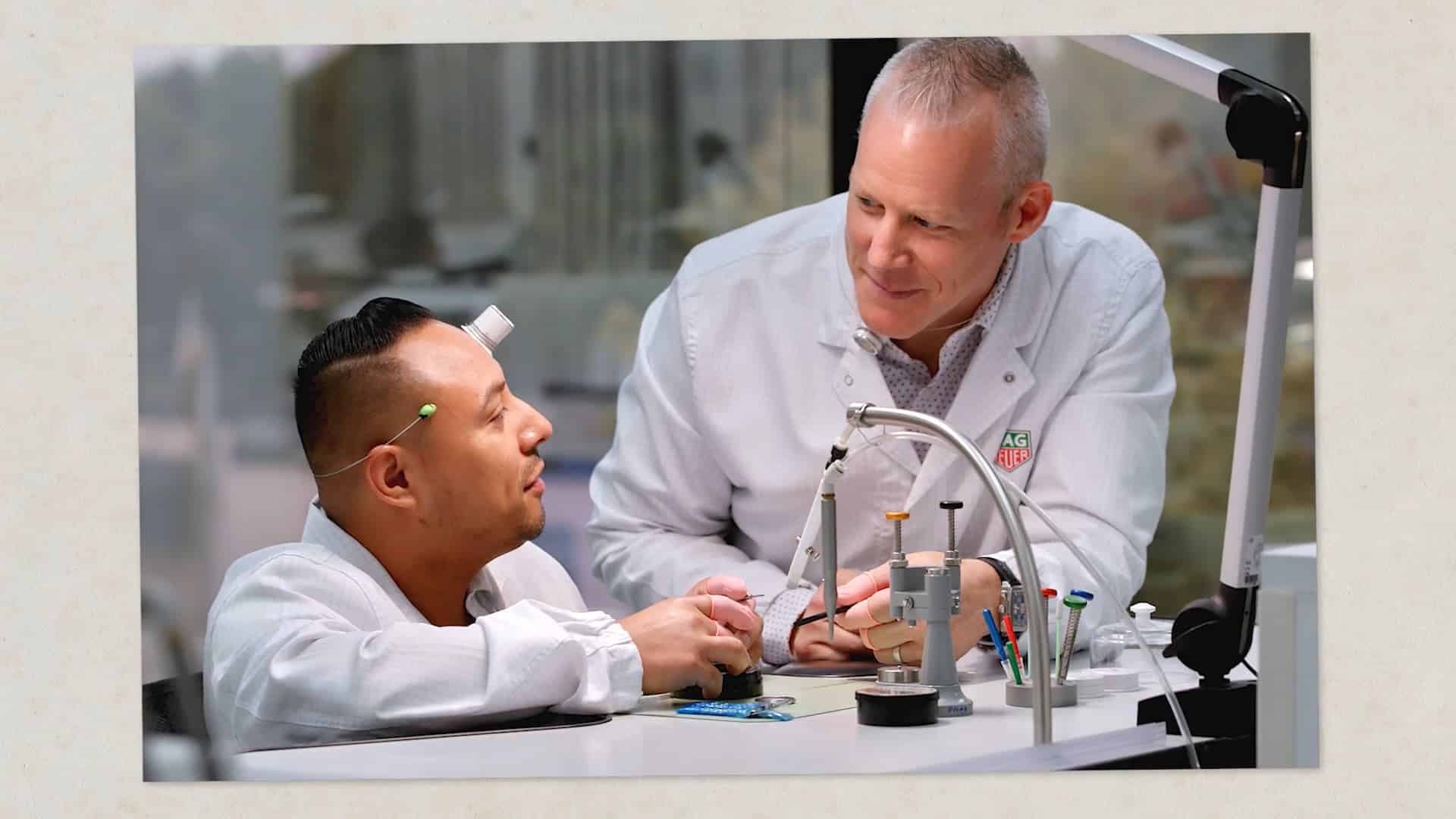
Professional standards still apply. The reference below reflects the audience expectation for craft and coherence—whether elements are captured live, assisted digitally, or both.
Brand Safety, Likeness, and Rights
Brand safety for AI video includes more than avoiding embarrassing artifacts. It includes trademark misuse, lookalike talent issues, unintended resemblance to real people, competitor visual cues, and training-data or output-license terms that may not match your distribution plans. Legal and brand teams should review tool terms for commercial use, ownership of outputs, and restrictions on likeness or trademark generation.
Do not generate fake customer testimonials, synthetic executives speaking as real leaders without disclosure and consent frameworks, or product demonstrations that imply physical tests you did not perform. Regulated industries should assume higher scrutiny. When in doubt, shoot the truth.
Document what was generated, what was captured, and what licenses cover music, stock, and model outputs. Future audits are easier when hybrid work is logged during production rather than reconstructed later.
Quality Limits You Should Expect
Generative video still struggles with consistency across shots, reliable typography, precise product geometry, and natural human performance over longer narratives. Hands, logos, micro-expressions, and physics can fail in ways that look fine in a two-second demo and wrong in a two-minute brand film. Human editorial QA is mandatory.
These limits are why hybrid methods often outperform “all AI” pipelines for B2B marketing. Use generative tools where inconsistency is tolerable or stylized; use cameras where precision and trust are the product.
Category context matters when judging risk—explore our industries pages for sectors where authenticity and compliance typically outweigh novelty.
Budgeting and Scope for AI-Inclusive Projects
AI does not automatically mean cheaper. Tooling, iteration time, specialist supervision, legal review, and rework for artifacts can offset supposed savings—especially if a generative experiment fails and you still need a live shoot. Budget honestly: exploration lane, production lane, and governance lane.
Ask partners to itemize where AI is proposed, what human roles remain, and what happens if output quality misses brand standards. A lower line item that creates reputational cleanup is not a bargain.
Regional production logistics still matter for hybrid shoots. See service areas when live capture remains part of the plan alongside AI-assisted elements.
Common Mistakes in AI Video Projects
Using AI to avoid interviewing real customers. Publishing synthetic people as if they were employees. Skipping license review because a demo was free. Accepting first-pass generative output without craft standards. Measuring success by novelty instead of audience clarity and trust.
Define “good enough” against brand guidelines, not against social AI demos.
Require artifact QA checklists before stakeholder premieres.
Separate internal experimental drafts from external brand masters.
Keep a live-production fallback for launch-critical dates.
Discipline turns AI from a distraction into a controlled option. Lack of discipline turns it into a brand incident.
How Grey Sky Films Approaches AI With Clients
We discuss fit, limits, and governance before promising pipelines. Some briefs will remain fully traditional. Some will benefit from AI-assisted visualization or selective post tools. A few may incorporate generative elements with clear disclosure and legal review. The constant is human accountability for story, taste, and delivery quality.
Learn more about our overall approach at Grey Sky Films. When you want to explore an AI-inclusive or hybrid scope, bring the audience, claim boundaries, and distribution plan—not only a tool preference.
Request a quote and note whether you are exploring AI assistance, need a live production plan, or want a hybrid recommendation with explicit trade-offs.
Governance: Disclosure, Review, and Tooling Policy
Organizations need a simple policy even before they need a dramatic AI film. Decide who can approve generative elements for external use, what must be disclosed internally or publicly, which tools are allowed, and how outputs are stored. Require that prompts and source references for critical visuals are retained when practical. Treat deepfake-like likeness risks as consent and legal issues, not creative flourishes.
Review cycles should include a dedicated artifact pass: logos, faces, product accuracy, readable text, and continuity. Stakeholders who only comment on messaging can miss technical failure modes. Give brand and legal a vocabulary for rejecting unsafe outputs without derailing every experiment.
Finally, keep evaluation criteria stable. If a live brand film must be clear, credible, and on-strategy, an AI-assisted film must meet the same bar. Lowering standards because a method is new is how novelty becomes debt.
Procurement and IT may also need a seat at the table for approved vendors, data handling, and whether client footage or scripts may be uploaded into third-party tools. Marketing urgency does not erase security review. A hybrid workflow that skips those checks can create downstream problems larger than any schedule gain from a faster draft animatic.
Measuring Experiments Without Confusing Them for Strategy
If you run AI-assisted pilots, measure them against explicit hypotheses: faster internal alignment, lower exploration cost, acceptable quality for a defined channel, or clearer boards before a live shoot. Do not declare victory because a demo impressed a meeting. Ask whether the asset would survive a skeptical buyer, a compliance review, and a month of real distribution.
Keep experimental drafts labeled as such in shared drives. Nothing erodes brand discipline faster than an unfinished generative cut escaping into a sales deck. When a pilot succeeds, document what human roles still mattered—prompt drafting, art direction, editorial selection, legal review—so the organization does not mythologize the tool as an unmanned studio.
Failed pilots are useful when they teach boundaries. If generative product shots cannot hold logo integrity, that is a finding, not a personal failure. Fold the finding into your “prefer live production when…” list and move on. Mature teams treat AI as a capability with a learning curve, not as a referendum on whether traditional craft still matters. It does.
Frequently Asked Questions
Can AI replace our need for a video production company?
For most credibility-led brand and B2B work, no—not fully. AI may reduce certain exploration costs or assist tasks, but strategy, real capture, editorial judgment, sound, and rights management still determine whether the film works. Grey Sky Films does not claim AI replaces all traditional production.
Will audiences know if parts were AI-generated?
Sometimes yes, sometimes not—but detection is not the only issue. Trust, accuracy, and policy matter. If disclosure is required by your industry, partners, or ethics standards, plan it explicitly.
Is AI video cheaper?
It can be for narrow tasks. It can also consume budget through iteration, QA, legal review, and failed experiments. Compare total cost to a right-sized live shoot, not to a fantasy of zero craft.
Can we use AI to create a spokesperson?
Synthetic spokespersons carry likeness, disclosure, and brand-trust risks. Many organizations should avoid this for primary brand communication unless legal and leadership explicitly approve a governed approach.
What about product demos?
If the demo implies physical performance, real capture or clearly labeled illustration is safer than generative simulation that could mislead.
How should we brief an AI-inclusive project?
Share audience, must-be-real elements, prohibited synthetic uses, distribution, claim limits, and success criteria. Ask for a hybrid plan with fallbacks.
Do you use AI on every project?
No. Tools are chosen per brief. Many projects remain fully traditional because that best serves the story and risk profile.
Conclusion
AI video production is most useful when treated as a supervised capability inside brand workflows—not as a magic substitute for people, places, and proof. Hybrid methods, clear rights, and honest limits protect both quality and reputation.
If you want a grounded recommendation on AI-assisted, live, or hybrid video for your next campaign, Grey Sky Films can help you scope it carefully. Request a quote with goals, constraints, and what must remain real on camera.
Need Help With AI Video Production?
Talk with Grey Sky Films about ai video production for your next video project — from planning through delivery.
We combine strategic thinking with cinematic storytelling to create videos that not only look great and also drive real results, and here’s what makes us different.
25+ Years Experience
Award-winning expertise you can trust
National & International
Serving clients across NJ, NY, PA, CT and beyond
Full-Service Production
End-to-end solutions from concept to delivery
Multi-Industry Specialists
Experts in Healthcare, Pharma, Industrial, Non-Profit and more
Real Clients, Real Reviews
Don’t just take our word for it! Hear directly from the brands and businesses we’ve partnered with to bring their stories to life.
"I’ve worked with GSF on several projects over several years and I knew they would knock it out of the park with the production. Mark Serao, as a director, is very observant, very collaborative with no ego, and he’s great at problem-solving. It was a fun [project] to do!”
Rob SchnappSenior Vice President, Executive Creative Director, Coyne PR
“We were going through a rebrand process and we needed a partner that was agile and could jump right in and satisfy our video needs. We needed to trust that we took on a partnership to deliver work that was of the same quality that we deliver to our clients, and the Grey Sky team did just this, they exceeded our expectations.”
Jess SpataroBrand Director/Strategist Lead, Studio Eagle
“Wow! I love working with Grey Sky. They put a tremendous amount of effort into every project. 1) They care about the quality of the work. 2) They care about you as a client. 3) They want to ensure that you get everything you need and more. You can tell that they care about the relationship and will work hard to deliver high quality, ahead of schedule and at a reasonable price. It’s rare to find a partner who delivers so much on every level.”
Alon FederDirector of Marketing, Leafguard
“We had an incredible experience working with the team at Grey Sky Films. Their creative ideas and direction helped us translate our message to a series of television commercials which have been well-received by our target audience.”
Rhonda MarazitiChief Marketing Officer, Withum+
"The team at Grey Sky is fantastic to work with-professional, responsive, and attentive to our needs. They provide excellent creative direction and make it easy to collaborate, even though none of our film participants are professional actors. The final product is always outstanding."
Phillippe BeekmanSenior Vice President, Hunterdon Health Foundation
"I’ve worked with Grey Sky Films for over a decade. They were the first production company I hired after interviewing countless others, and that decision set the tone for everything that followed. Mark and Dana were deeply invested in the project from the start. They consistently went above and beyond to create a professional, comfortable on-set environment, while also pushing the creative to ensure the final product was something we were all truly proud of. Over the years, I continued collaborating with the Grey Sky team as both an actor and producer, building a relationship rooted in trust, creativity, and shared vision. I’m especially proud to say that our most recent project together brought award-winning actors to set and attracted the attention of producers who went on to pitch the pilot to major networks, including The WB, Freeform (now part of The Walt Disney Company), and Paramount."
Stacey Van Gorder LeungProducer, Founder SV Acting Studio
Our Simple Process
From the first call to a final cut, our streamlined method ensures clarity, creativity, and results without the stress or guesswork.
We start by understanding your goals, audience, and vision through in-depth consultation
Plan
Develop a comprehensive strategy including scripting, storyboarding, and production scheduling
Action
Execute the production and deliver a polished final product that achieves your objectives
Our Clients
Trusted by leading brands across all industries
Ready To Start Your Project?
From initial concept to final delivery, we handle every step of the video production process, crafting powerful stories that captivate your audience, amplify your brand, and drive real results.