Corporate Video Production for Companies That Need Clarity at Scale
Corporate video is how modern organizations explain themselves when a slide deck is too thin and a sales call is too late. Prospects, partners, recruits, investors, and employees all arrive with incomplete context. A well-built corporate film compresses that context into a credible narrative: what you do, who you serve, how you work, and why your approach is different.
Grey Sky Films produces corporate video for B2B and consumer brands that need more than generic b-roll with mission statements overlaid. Through our production services, we help marketing and communications leaders shape company stories that work on websites, sales enablement, events, and internal channels. Organizations across NJ, NY, PA, and CT frequently need this clarity for regional growth stories that still read nationally.
Below is a practical framework for planning corporate video: formats that work, when to invest, how production runs, what affects cost, and how to keep the film useful beyond the first homepage upload.
Key Takeaways
Corporate video should answer a specific audience question—not try to be every company story at once.
Strong films balance proof (people, process, product) with a clear point of view about differentiation.
Plan distribution first: homepage, sales decks, events, recruiting, and investor pages may need different cuts.
Executive interviews work best when leaders are coached for conversational clarity, not recited slogans.
Budget follows scope: locations, departments featured, motion graphics, and revision cycles drive cost more than camera brand.
Review comparable work in our case studies before locking tone and length.
What Corporate Video Is—and What It Is Not
Corporate video is organizational storytelling designed to build understanding and trust. Common formats include company overview films, capability videos, culture pieces, facility tours, leadership messages, and anniversary or milestone films. The through-line is institutional: the company is the subject, even when individuals appear on camera.
It is not a product demo, a hard-sell commercial, or a raw testimonial compilation—though elements of those may appear. Corporate films fail when they become laundry lists of services with no narrative spine. They succeed when a viewer leaves able to explain your value in one or two sentences and feel confident exploring next steps.
Many teams pair a hero corporate film with modular clips inside broader content packages, so the same shoot day yields homepage, LinkedIn, and sales-enablement versions without restarting production for every channel.
When Corporate Video Is Worth the Investment
Invest when your website cannot explain complexity, when sales cycles stall on credibility, when recruiting needs culture proof, or when leadership must communicate a transformation. Mergers, rebrands, new market entries, and flagship facility openings are classic triggers.
Website and inbound: Replace vague homepage copy with a film that orients visitors in under two minutes.
Sales enablement: Give AEs a credible open that sets category context before discovery.
Events and conferences: Loop a capability film that works without a presenter.
Internal alignment: Share strategy or culture narratives that reach distributed teams consistently.
If your only goal is a short promotional burst tied to a discount or offer, commercial creative may fit better. If you need deep customer proof, prioritize testimonials or case films and let the corporate piece provide the frame.
Corporate Video Production Process
Corporate projects live or die on discovery. Before scripting, map stakeholders, claims that must be true, visuals you can actually capture, and the primary audience. Then build a narrative outline that earns each scene.
Stage
Focus
Risk if skipped
Discovery
Audience, differentiators, proof points, distribution
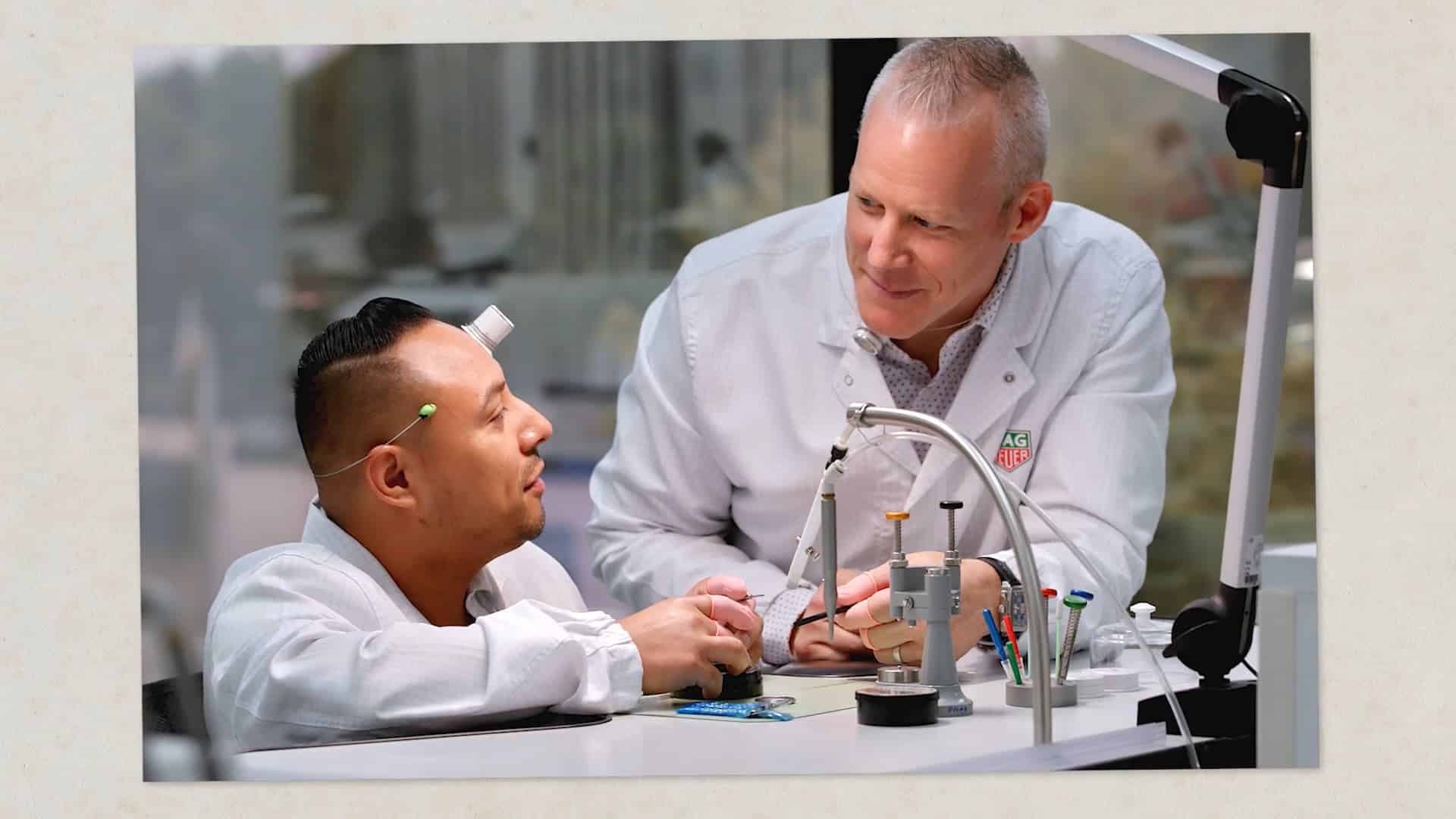
Professional production craft—lighting, sound, pacing, and finishing—signals organizational competence before a single claim lands. The sample below shows the level of polish corporate audiences associate with established brands.
Best Practices for Credible Corporate Storytelling
Lead with a tension your audience recognizes: complexity, risk, growth pressure, or a category shift. Then show how your company responds through people and process, not adjectives. Prefer specific language over abstract values. If you claim collaboration, show cross-functional work. If you claim craftsmanship, show the craft.
Limit talking heads. Intercut interviews with authentic operational footage. Coach executives to speak in plain sentences and one idea at a time. Keep runtime honest: a homepage overview often lands between 60 and 150 seconds; deeper capability films can run longer if chaptered for sales use.
Align legal and brand early on claims, logos, and customer mentions. Nothing slows a corporate film like late compliance notes after picture lock.
Budget and Scope Drivers
Corporate budgets track locations, interview count, motion graphics complexity, music licensing, and how many finished versions you need. A single-location leadership message is a different project than a multi-site capability film covering operations, customers, and culture.
Decide whether you need cinematic brand atmosphere, documentary realism, or a hybrid. Atmosphere costs more in lighting and art direction; documentary styles need more time for access and candid coverage. Either can work—mismatch between tone and company reality is what feels expensive in the wrong way.
Compare partners on discovery quality and editorial judgment. Category familiarity helps; explore our industries coverage to see relevant contexts. Geography matters for logistics: check service areas if you need crews near headquarters or distributed sites.
Common Mistakes to Avoid
Writing the script as a brochure read aloud. Featuring only executives when buyers want to see operators and customers. Overusing stock footage that contradicts your real environments. Building one four-minute film for every channel instead of a modular set. Waiting to involve sales and recruiting stakeholders until the premiere.
Another mistake is treating the corporate film as a one-time artifact. Markets change; messaging shifts. Plan for refresh cycles—new chapter inserts, updated supers, or a biennial reshoot of key scenes—so the asset stays accurate without full reinvention every year.
Decision Factors When Hiring a Corporate Video Partner
Ask how the team extracts differentiation in discovery. Request sample narratives, not only beautiful frames. Clarify revision rounds, stakeholder management, and who sits in the edit. Confirm they can deliver website, social, and presentation versions from one production plan.
Grey Sky Films works with marketing leaders who need corporate storytelling that supports real go-to-market motions. Learn more on the Grey Sky Films homepage, then share your audience and distribution plan when you are ready to scope.
To price a company overview, capability film, or multi-cut corporate package, request a quote with must-include messages, locations, and deadline constraints.
Messaging Architecture for Corporate Films
Corporate films need a messaging architecture before they need a shot list. Start with the primary audience question you must answer in the first thirty seconds—usually a version of “What do you do, for whom, and why should I care?” Then layer proof: capabilities, markets served, distinctive process, people, and outcomes you can show without fabricating metrics. Secondary audiences (recruits, partners, investors) can be served with alternate cuts, but the hero cut should not try to be everyone’s film at once.
Map claims to visual evidence. If you say you are operationally rigorous, the camera must see rigorous operations. If you say you are collaborative, show collaboration in real work—not a staged huddle in a hallway. This discipline prevents the hollow corporate reel that looks expensive and communicates nothing distinctive. It also surfaces gaps early: if a claim cannot be filmed, either change the claim or create a graphic/data treatment that is still honest.
Chaptering helps longer capability films. A two-minute overview might stand alone on the homepage, while a five-minute sales version chapters into markets, solutions, and implementation. Viewers and sales teams both benefit when the narrative has seams they can navigate. Build those seams in scripting so the edit is not forced to invent structure from unstructured interviews.
Keep language plain. Corporate jargon feels precise internally and opaque externally. Translate internal program names into buyer language. If you must use a proprietary term, define it once visually or verbally. The film should leave a stranger able to repeat your value proposition accurately to a colleague—that is a practical test of clarity worth applying at rough cut.
Maintaining and Extending Corporate Video Assets
Corporate video ages in two ways: visually and factually. Visual aging is slower if the cinematography is timeless and branded rather than trend-chasing. Factual aging is faster—new markets, leadership changes, outdated product names, retired initiatives. Plan a review cadence (for example, every 12–18 months) where marketing audits supers, claims, and featured faces against current reality.
Design for inserts. If you know a facility tour chapter or a leadership open may change, shoot and edit so those sections can be swapped without rebuilding the entire timeline. Maintain an organized project archive with labeled selects, graphics templates, and music licenses that allow reuse. The cheapest second film is often a smart revision of the first.
Quarterly: check claims, titles, and logo lockups against brand guidelines.
After major launches: add a short chapter or cutdown rather than ignoring the shift.
After leadership change: decide whether a new open is required or a VO refresh suffices.
Annually: evaluate whether tone still matches positioning and competitive context.
Also extend the shoot into stills and short clips for LinkedIn, internal comms, and sales one-pagers. Corporate production days are expensive to reopen; maximizing derivative assets is responsible stewardship of budget and of the employees who gave their time on camera.
Frequently Asked Questions
How long should a corporate overview video be?
Most homepage overviews perform best between about one and two and a half minutes. Longer pieces can work for sales or events if they are structured in clear chapters.
Should we use voiceover or on-camera leadership?
Either can work. VO offers control and polish; on-camera leadership builds trust when executives communicate well. Hybrids are common: a host narrative with selective interview moments.
How many locations do we need?
Only as many as the story requires. One strong location with real work happening often beats three empty offices. Prioritize proof over geography for its own sake.
Can corporate video support recruiting too?
Yes, but culture-heavy recruiting cuts often need different emphasis than buyer-facing capability films. Plan both during scripting so the shoot covers both needs efficiently.
What about music and graphics?
Licensed music and clean motion graphics elevate professionalism. Budget them deliberately; last-minute temp tracks and placeholder supers create approval friction.
How do we keep the film from feeling generic?
Anchor on specific customer problems, distinctive process moments, and language your team actually uses. Avoid interchangeable values montages.
When should legal review happen?
Before the shoot for claims and customer permissions, and again at rough cut before picture lock. Late legal notes are a common cause of expensive rework.
Conclusion
Corporate video earns its budget when it creates shared understanding quickly—for buyers, partners, talent, and internal teams. The strongest films are specific, well-structured, and built for the channels where decisions actually happen.
If your organization needs a clearer company narrative on video, Grey Sky Films can help you plan and produce it with distribution in mind. Request a quote to outline scope, audiences, and timelines.
Need Help With Your Corporate Video?
Talk with Grey Sky Films about planning, producing, and delivering corporate video that supports your brand and business goals.
We combine strategic thinking with cinematic storytelling to create videos that not only look great and also drive real results, and here’s what makes us different.
25+ Years Experience
Award-winning expertise you can trust
National & International
Serving clients across NJ, NY, PA, CT and beyond
Full-Service Production
End-to-end solutions from concept to delivery
Multi-Industry Specialists
Experts in Healthcare, Pharma, Industrial, Non-Profit and more
Real Clients, Real Reviews
Don’t just take our word for it! Hear directly from the brands and businesses we’ve partnered with to bring their stories to life.
"I’ve worked with GSF on several projects over several years and I knew they would knock it out of the park with the production. Mark Serao, as a director, is very observant, very collaborative with no ego, and he’s great at problem-solving. It was a fun [project] to do!”
Rob SchnappSenior Vice President, Executive Creative Director, Coyne PR
“We were going through a rebrand process and we needed a partner that was agile and could jump right in and satisfy our video needs. We needed to trust that we took on a partnership to deliver work that was of the same quality that we deliver to our clients, and the Grey Sky team did just this, they exceeded our expectations.”
Jess SpataroBrand Director/Strategist Lead, Studio Eagle
“Wow! I love working with Grey Sky. They put a tremendous amount of effort into every project. 1) They care about the quality of the work. 2) They care about you as a client. 3) They want to ensure that you get everything you need and more. You can tell that they care about the relationship and will work hard to deliver high quality, ahead of schedule and at a reasonable price. It’s rare to find a partner who delivers so much on every level.”
Alon FederDirector of Marketing, Leafguard
“We had an incredible experience working with the team at Grey Sky Films. Their creative ideas and direction helped us translate our message to a series of television commercials which have been well-received by our target audience.”
Rhonda MarazitiChief Marketing Officer, Withum+
"The team at Grey Sky is fantastic to work with-professional, responsive, and attentive to our needs. They provide excellent creative direction and make it easy to collaborate, even though none of our film participants are professional actors. The final product is always outstanding."
Phillippe BeekmanSenior Vice President, Hunterdon Health Foundation
"I’ve worked with Grey Sky Films for over a decade. They were the first production company I hired after interviewing countless others, and that decision set the tone for everything that followed. Mark and Dana were deeply invested in the project from the start. They consistently went above and beyond to create a professional, comfortable on-set environment, while also pushing the creative to ensure the final product was something we were all truly proud of. Over the years, I continued collaborating with the Grey Sky team as both an actor and producer, building a relationship rooted in trust, creativity, and shared vision. I’m especially proud to say that our most recent project together brought award-winning actors to set and attracted the attention of producers who went on to pitch the pilot to major networks, including The WB, Freeform (now part of The Walt Disney Company), and Paramount."
Stacey Van Gorder LeungProducer, Founder SV Acting Studio
Our Simple Process
From the first call to a final cut, our streamlined method ensures clarity, creativity, and results without the stress or guesswork.
We start by understanding your goals, audience, and vision through in-depth consultation
Plan
Develop a comprehensive strategy including scripting, storyboarding, and production scheduling
Action
Execute the production and deliver a polished final product that achieves your objectives
Our Clients
Trusted by leading brands across all industries
Ready To Start Your Project?
From initial concept to final delivery, we handle every step of the video production process, crafting powerful stories that captivate your audience, amplify your brand, and drive real results.