Interview Video Production for Credible Expert Conversations
Interview video is one of the most efficient ways to turn institutional knowledge into content people actually watch. A well-run interview captures expertise, personality, and proof in the subject’s own words—then editorial craft shapes those answers into stories for websites, thought leadership, case studies, recruiting, and social.
Grey Sky Films approaches interview production as both a people craft and a technical craft. Through our video services, we design lighting, sound, and questioning so leaders, customers, and subject-matter experts can think clearly on camera. Brands across the Northeast corridor—and nationally—use interview-led content when authenticity matters more than scripted performance.
Interview formats also scale across maturity levels. Early-stage companies use them to put founders and practitioners on the record quickly. Mid-market and enterprise teams use them to publish expertise at a cadence marketing alone cannot script from scratch. In both cases, the win is the same: viewers hear a human intelligence behind the brand, not only a polished claim.
This article covers interview formats, when they outperform scripted films, how to run production, coaching practices that reduce anxiety, budget considerations, and mistakes that make interviews feel stiff or off-brand. Use it as a planning checklist before you invite anyone onto a set.
Key Takeaways
Great interview videos are designed before the first question: audience, story arc, and edit use cases determine the day.
Sound quality and eye-line consistency matter as much as camera choice for credibility.
Coaching beats scripting for most executives; prepare talking points, not teleprompter essays.
Plan B-roll and supporting visuals; talking heads alone rarely sustain attention.
One interview day can yield multiple assets if questions are structured for modular editing.
Compare interview-led work in our case studies library when evaluating tone and pacing.
What Interview Video Production Covers
Interview video production includes pre-interview research, question design, on-set directing, multi-camera or single-camera capture, audio, lighting, and editorial assembly into finished pieces. Subjects may be executives, employees, customers, partners, or industry experts. Styles range from formal seated interviews to walk-and-talk documentary coverage.
The product is rarely “the interview” as a raw conversation. More often it becomes a thought leadership cut, a case study film, a recruiting story, a podcast-style series episode, or short social clips. That means production must anticipate the edit: clean answers, usable soundbites, and coverage that supports narrative pacing.
Interview content also pairs well with packaged production programs. Teams building ongoing thought leadership often fold interview days into content packages so monthly or quarterly filming stays efficient and on-brand.
When Interview Formats Are the Right Choice
Choose interviews when credibility depends on a real person’s voice: complex expertise, customer outcomes, leadership vision, or culture. Interviews beat heavy VO when audiences distrust polished corporate language. They are also efficient when you need many messages from one shoot day.
Thought leadership: Experts explain frameworks buyers care about.
Customer stories: Buyers hear peers describe problems and results in their own words.
Leadership communications: Executives address strategy with human presence.
Documentary brand films: Multiple interviews build a chorus around a theme.
Skip pure interview formats when you need precise legal claims line-by-line, highly choreographed product demos, or commercial hooks that require controlled timing down to the frame. In those cases, interviews can still support, but should not carry the entire asset.
How Professional Interview Production Works
Strong interview days start with a content map: what stories you need, which questions unlock them, and which answers will become standalone clips. A producer or director then runs a calm set: briefing the subject, testing levels, locking framing, and asking follow-ups that sound like conversation rather than interrogation.
Element
Production standard
Why it matters
Audio
Lav and/or boom, quiet location, monitored levels
Poor sound destroys trust faster than imperfect framing
Lighting
Motivated, flattering, consistent across subjects
Visual continuity across a series or multi-person film
Framing
Intentional eye-line, headroom, background control
Distracting backgrounds pull focus from expertise
Questions
Open prompts plus precise follow-ups
Yields usable soundbites without sounding scripted
Coverage
B-roll plan tied to topics discussed
Enables pacing and visual proof in the edit
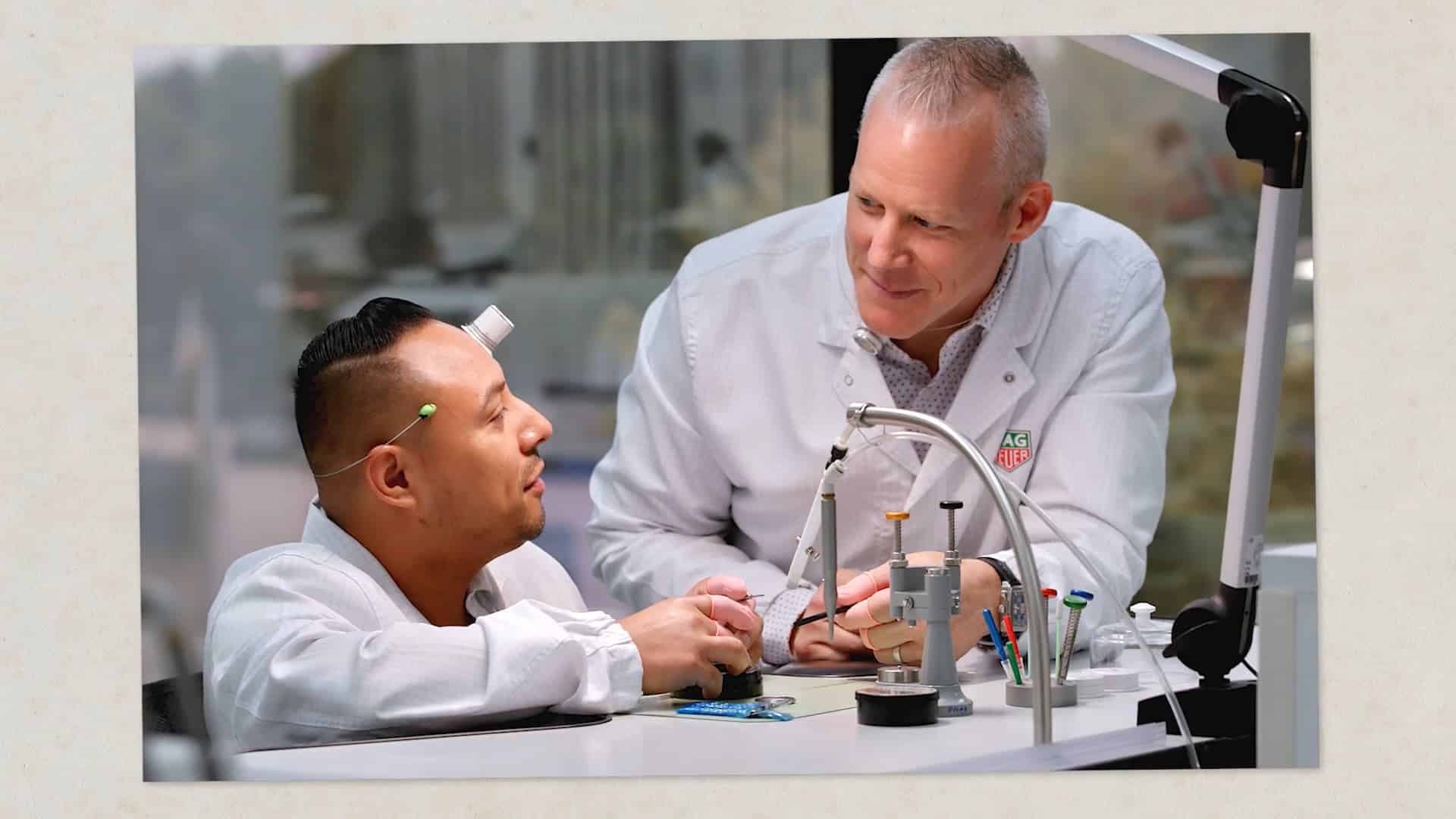
The following example demonstrates professional production craft—camera control, lighting, and finishing—that elevates interview-led storytelling beyond a casual webcam recording.
On-Camera Coaching and Best Practices
Most professionals are not performers. Help them by sharing themes in advance, not full scripts. Ask them to answer in complete thoughts for editorial flexibility. Encourage concrete examples over abstractions. If they wander, redirect gently: “Give me that in one sentence for someone new to our category.”
Seat subjects at a slight angle to camera for conversational feel, unless a direct-to-lens address is intentional. Keep water nearby, schedule breaks, and protect the room from interruptions. For multi-person projects, maintain consistent lighting diagrams so the series feels like one body of work.
Edit ruthlessly for clarity. Viewers forgive imperfect speech patterns; they do not forgive circular answers. Remove false starts, tighten pauses, and use B-roll to bridge ideas without manufacturing claims the subject did not make.
Budget Factors for Interview Shoots
Interview budgets are driven by crew size, number of setups, travel, interview count, and editorial load. A single executive in one controlled room is efficient. A documentary-style day with multiple subjects, locations, and heavy B-roll is a larger production—even if nobody memorizes lines.
Series production can lower per-episode cost when look, questions, and workflows are standardized. If you need ongoing expert content, discuss retainer or package models rather than one-off pricing for every conversation.
Industry context affects access and logistics; review relevant industry pages when your subjects work in regulated or operationally complex environments. For location planning near your offices, see our service areas.
Mistakes That Make Interviews Feel Amateur
Reading questions off a laptop without listening. Accepting the first answer when a sharper follow-up would unlock the real insight. Shooting next to a noisy HVAC return. Using a window as uncontrolled backlight. Publishing 20-minute unedited conversations when the brief called for a two-minute story.
Also avoid over-directing authenticity out of the room. If every answer is restated as a slogan, you lose the reason you chose interview format. Aim for clarity with personality—not corporate karaoke.
Choosing an Interview Production Partner
Hire for directing skill and editorial taste as much as gear. Ask how they prepare subjects, how they handle nervous executives, and how they structure questions for modular content. Request examples where interviews carry the narrative, not just appear as cutaways.
Grey Sky Films builds interview-led films and series for marketing teams that need expertise on camera without theatrical stiffness. Explore more at greyskyfilms.com, then bring your subject list and distribution goals to a scoping conversation.
Ready to plan an interview day or thought leadership series? Request a quote with topics, speakers, and the assets you need from the footage.
Question Design That Produces Editable Answers
Interview days fail quietly when questions are vague. “Tell us about your work” yields meandering answers that are hard to cut. Better prompts ask for a story with edges: a decision, a trade-off, a before-and-after, a misconception in the category, a lesson learned the hard way. Those answers contain beginnings and endings editors can use.
Structure the question list in tiers. Tier one covers must-have themes for the hero piece. Tier two targets modular social clips and sales objection handlers. Tier three is exploratory—useful when a subject opens an unexpectedly strong thread. Share tier one themes with subjects in advance so they can gather examples; keep exact wording flexible so delivery stays conversational.
Listen for incomplete thoughts and ask for the clean button: “Can you give me that again as a standalone sentence?” This is not about manufacturing spin; it is about helping a thoughtful person package an idea for strangers who lack context. Most executives appreciate the coaching once they understand why it helps the final film.
Document name spellings, titles, and preferred company pronunciations on set. Small errors in lower thirds undermine otherwise strong interviews. If multiple subjects appear in one film, capture consistent slate information and note wardrobe colors so editorial continuity is easier across a long post schedule.
Building an Interview Content System
One interview can be an asset; a cadence of interviews becomes a system. Thought leadership programs, customer proof libraries, and executive communications all benefit from recurring production blocks with a locked visual language. Consistency in lighting diagrams, aspect ratios, intro graphics, and music beds trains audiences to recognize your series and reduces per-episode decision fatigue.
Create an intake brief for each subject: audience, goal, three ideas that must land, topics to avoid, and distribution targets. That brief keeps producers aligned when marketing, PR, and subject-matter owners all have stakes in the same conversation. It also prevents last-minute topic changes that break B-roll plans.
Standardize release forms and approval windows before inviting guests.
Maintain a select bin taxonomy: hero soundbites, social clips, long explanations, discarded takes.
Publish a simple calendar so stakeholders know when new episodes or clips ship.
Retire outdated interviews when claims, products, or titles change materially.
Measure usefulness, not vanity. Track whether sales uses clips, whether site dwell time improves on interview pages, and whether internal teams request more of the format. Interview production earns budget when it repeatedly solves a communication problem—not when it merely fills a content calendar.
Single-Camera Versus Multi-Camera Interview Setups
Setup choice should follow editorial ambition and budget, not gear preference alone. A disciplined single-camera interview with excellent sound, intentional eye-line, and planned B-roll can look premium and keep crews lean—ideal for recurring thought leadership or rapid executive messages. Multi-camera setups earn their cost when you need conversational energy between angles, when subjects gesture expressively, or when you want to protect pacing without relying solely on B-roll bridges.
If you choose two cameras, match color and exposure carefully and assign clear roles: a tighter hero angle and a wider contextual angle, for example. Avoid mismatched looks that force editors into awkward cuts. For series work, lock the diagram so every episode feels native to the same show. Consistency compounds brand recognition across a library more than any single “hero” lighting experiment.
Remote interviews remain an option for speed and geography, yet they trade away control. If remote is required, invest in subject coaching for framing, light, and quiet rooms, and set expectations that the result will feel different from an in-person flagship piece. Many teams use remote for supporting clips and reserve in-person production for cornerstone stories.
Frequently Asked Questions
Should interviews be scripted?
Usually no. Prepare themes, must-hit points, and example stories. Full scripts tend to flatten delivery unless the speaker is highly trained.
How long should each interview run on set?
Plan 30–60 minutes of conversation for a typical subject if you need a main film plus clips. Complex case stories may need longer.
Do we need two cameras?
Two cameras help editorial pacing and cover gesture cutaways, but a well-run single-camera interview with strong B-roll can still look premium.
What if our executive is camera-shy?
Use a conversational off-camera interviewer, shorter takes, and a quiet set. Many leaders relax after the first few questions when the process feels like a meeting, not a performance.
Can we film remote interviews?
Remote can work for speed, but lighting, sound, and background control are harder. For flagship assets, in-person production usually yields stronger results.
How do we get social clips from long interviews?
Design questions that produce standalone answers. In the edit, pull 20–45 second ideas with clear openings and endings rather than random mid-thought excerpts.
Conclusion
Interview video production turns real expertise into usable brand content when questioning, craft, and editing are intentional. The format rewards preparation and listening more than theatrics.
If you need executive, customer, or expert interviews that feel human and land on-message, Grey Sky Films can design the day and the deliverables around your goals. Request a quote to get started.
Need Help With Your Interviews Video?
Talk with Grey Sky Films about planning, producing, and delivering interviews video that supports your brand and business goals.
We combine strategic thinking with cinematic storytelling to create videos that not only look great and also drive real results, and here’s what makes us different.
25+ Years Experience
Award-winning expertise you can trust
National & International
Serving clients across NJ, NY, PA, CT and beyond
Full-Service Production
End-to-end solutions from concept to delivery
Multi-Industry Specialists
Experts in Healthcare, Pharma, Industrial, Non-Profit and more
Real Clients, Real Reviews
Don’t just take our word for it! Hear directly from the brands and businesses we’ve partnered with to bring their stories to life.
"I’ve worked with GSF on several projects over several years and I knew they would knock it out of the park with the production. Mark Serao, as a director, is very observant, very collaborative with no ego, and he’s great at problem-solving. It was a fun [project] to do!”
Rob SchnappSenior Vice President, Executive Creative Director, Coyne PR
“We were going through a rebrand process and we needed a partner that was agile and could jump right in and satisfy our video needs. We needed to trust that we took on a partnership to deliver work that was of the same quality that we deliver to our clients, and the Grey Sky team did just this, they exceeded our expectations.”
Jess SpataroBrand Director/Strategist Lead, Studio Eagle
“Wow! I love working with Grey Sky. They put a tremendous amount of effort into every project. 1) They care about the quality of the work. 2) They care about you as a client. 3) They want to ensure that you get everything you need and more. You can tell that they care about the relationship and will work hard to deliver high quality, ahead of schedule and at a reasonable price. It’s rare to find a partner who delivers so much on every level.”
Alon FederDirector of Marketing, Leafguard
“We had an incredible experience working with the team at Grey Sky Films. Their creative ideas and direction helped us translate our message to a series of television commercials which have been well-received by our target audience.”
Rhonda MarazitiChief Marketing Officer, Withum+
"The team at Grey Sky is fantastic to work with-professional, responsive, and attentive to our needs. They provide excellent creative direction and make it easy to collaborate, even though none of our film participants are professional actors. The final product is always outstanding."
Phillippe BeekmanSenior Vice President, Hunterdon Health Foundation
"I’ve worked with Grey Sky Films for over a decade. They were the first production company I hired after interviewing countless others, and that decision set the tone for everything that followed. Mark and Dana were deeply invested in the project from the start. They consistently went above and beyond to create a professional, comfortable on-set environment, while also pushing the creative to ensure the final product was something we were all truly proud of. Over the years, I continued collaborating with the Grey Sky team as both an actor and producer, building a relationship rooted in trust, creativity, and shared vision. I’m especially proud to say that our most recent project together brought award-winning actors to set and attracted the attention of producers who went on to pitch the pilot to major networks, including The WB, Freeform (now part of The Walt Disney Company), and Paramount."
Stacey Van Gorder LeungProducer, Founder SV Acting Studio
Our Simple Process
From the first call to a final cut, our streamlined method ensures clarity, creativity, and results without the stress or guesswork.
We start by understanding your goals, audience, and vision through in-depth consultation
Plan
Develop a comprehensive strategy including scripting, storyboarding, and production scheduling
Action
Execute the production and deliver a polished final product that achieves your objectives
Our Clients
Trusted by leading brands across all industries
Ready To Start Your Project?
From initial concept to final delivery, we handle every step of the video production process, crafting powerful stories that captivate your audience, amplify your brand, and drive real results.