
Creating Connection and Trust
Trust: The Cornerstone of Healthcare Decisions
Brand storytelling through video generally comes with a handful of constants across industries. The goals are, very broadly speaking, getting the word out about a product or service, and the message is “This is who we are, here is what we offer, and here’s why it’s better or different from the competition.” It’s different with healthcare.
For audiences, there’s an array of situations, health conditions, levels of technical knowledge, needs, and desires. For healthcare organizations and brands, there’s often complex information to simplify, topics to demystify, and awareness to build. But the most important—and challenging—layer involved is trust.
Because healthcare decisions are deeply personal, trust has always been a factor. In bygone days that trust was generally easier to earn. More people trusted doctors because they were doctors, or based on word-of-mouth referrals from family or friends, or simply went to providers that were nearby. Today, trust is the single most important factor in making healthcare choices, and research shows it’s in short supply. Because of this, businesses and brands in the sector can face some significant hurdles when it comes to creating communications that build meaningful engagement.
By virtue of the subject matter, healthcare communications are multifaceted. Not only do healthcare communications need to be compliant from a regulatory standpoint, they also need to be profoundly human. Content needs to be transparent, consistent, and build a sense of connection that leads to trust.
Trust-Building Starts Early On
Some healthcare decisions are fairly straightforward. For example, if we’re looking for a primary care physician, logistical convenience is often a major factor, along with the ease of getting an appointment. But other healthcare matters can be high-stakes and feel confusing and emotionally charged, especially when they could be life threatening . Either way, when searching for a provider or researching treatment options for a given health issue, people aren’t simply comparing prices or product features. They need to feel empowered to make decisions, and advocate for their health..
Whether we’re trying to decide if a medication is right for us, understand a new diagnosis, or select a provider, making a decision isn’t as straightforward as choosing a brand of peanut butter or a home repair company. Hearing or seeing someone describe what’s on offer doesn’t satisfy the layers involved in health choices. And one piece of content, no matter how good it is, is very unlikely to tell us what we need to know to determine if something is a fit for us or our specific situation.
As healthcare technologies, pharmaceuticals, and physician specializations continue to evolve, we’re presented with what can seem like endless amounts of information and options. With ads, social media, website content, review platforms, and online forums, there can be an intimidating mountain of data to sift through. Other times we can’t easily access what we really want to know.
On the other side of the picture, healthcare organizations must convey their value in an increasingly competitive environment while taking into account the sensitivity and intricacy of their subject matter. And what more and more of the healthcare industry is learning is that the patient journey begins long before an office visit. Communications need to meet patients at the moment they begin to seek care and follow them through their journey.
Video has the unique ability to combine visuals, voice, and informational graphics to convey complex information in a meaningful, intuitive way.
Context is Everything in a Sea of Scenarios
Healthcare marketers aren’t communicating about one thing to one audience. They’re communicating a wide range of messages to people with vastly different needs, motivations, and levels of understanding. Each communication has its own audience, objectives, and requirements. Every piece of content needs to be created with the specific contextual details and the needs of the target audience as its foundations.
For healthcare communicators, content needs to be informative and accurate. It often also needs to satisfy competing organizational priorities and multiple business objectives. In addition, the overarching intent must come through. Is it meant to educate? Build credibility? Drive action? At a more detailed level, unlike some of the sectors we produced videos for, there are myriad purposes for creating content.
- Consider just a handful of these:
- Illustrating cutting edge health technologies and procedures
- Building public awareness about health conditions or contagions
- Educating audiences about growth and development related topics
- Addressing stigma or misunderstandings about a particular condition
- Introducing a new pharmaceutical product
- Showcasing a facility
- Presenting treatment options for a variety of health conditions
- Describing a surgical procedure
- Introducing clinicians and staff
Staff recruitment - Internal learning & development
- Providing FAQ and other general educational content for a medication or organization
Whether the purpose applies to internal or external audiences, all the above scenarios share a common challenge: making complex information meaningful and digestible to the people who need it.
Because healthcare marketing & communications come with so many facets, a one-size-fits-all approach is almost never the answer. Content has to reflect each specific context and what target audiences want to know. It must also fit the various stages of the patient funnel, for example the education awareness phase vs. the critical decision stage. In addition to these considerations (as with any communications campaign) healthcare content needs to be tailored to each distribution channel. Because what makes sense or resonates on Instagram often doesn’t work for broadcast media or streaming ads.
While any health-related subject matter can benefit from the presence of static content, video can simplify and humanize difficult or everyday topics in ways that other media may struggle to achieve. It can visualize invisible processes, illustrate procedures, combine expert explanation with graphics, and help audiences connect ideas. It can also help organizations establish credibility and introduce the people behind their services. For all these reasons, an increasing number of facilities, brands, and providers continue to embrace video as a key component of their communications.
Ada Health
Something we’re big on at Grey Sky Films is empathy and its ability to create a sense of trust. The ability to empathize is good for basic human connection, and it can help with the creative process. Empathy is also a critical part of storytelling for the healthcare industry. This was at the root of what we produced for the Ada Health project we did in 2022.
At that time, the world was emerging from the covid pandemic, and although the threat of contracting the virus was still very real, most people were tired of hearing about it. But that didn’t mean healthcare companies would simply turn off the topic.
That year, health tech company Ada Health partnered with Pfizer to roll out a COVID-specific, AI-powered care journey. The platform in general provides users with a symptoms checker and helps connect them with telehealth providers. To specifically address covid-related concerns, Ada Health developed a questionnaire to help identify vulnerable patients more susceptible to progression to severe covid. They needed video content that could build awareness and increase signups despite the fatigue around the subject, and they chose to work with Grey Sky Films.
We needed an inventive way to overcome the social climate and engage audiences in the U.S. and Europe. And we wanted to create something that felt more like a conversation and less like another voice telling people “get checked out for covid.” To build empathy, we wanted the target audience to see themselves reflected in what we produced. We also felt that a departure from influencer-style & public health approaches would help audiences connect even more. The question was: how do we put people at ease with yet another piece of covid-related content while helping Ada Health satisfy their business goals?
The answer was in the power of personification. This is a mechanism we’ve used successfully for a long time. Personification is part of Grey Sky’s “show, don’t tell” philosophy, which we use as a North Star reference in our creative development process. It helps us to continue thinking outside the box when clients come to us with the need to break down any topic or process for their target audience. For example, in our earlier days, we did a project for RAD Data when they wanted to spread the word about their computer protection tool, PineApp. Instead of trying to explain their technical spam-control product, we turned the spam and viruses into human characters and portrayed PineApp as the team that fights back.
In the case of Ada Health, we found it inspiring that Ada Health is named after Ada Lovelace, prominent mathematician and the world’s first computer programmer. So, to further humanize the series, we personified the mobile app as a modernized version of the company’s namesake. We developed “Ada’s Here for You,” a series of videos illustrating realistic scenarios targeted to people with diabetes and COPD, as well as seniors, and caregivers.
Ada's
Here
For
You
Video Marketing for Women’s Health
Notes From Dana at Grey Sky Films’ Diary
I’m passionate about healthcare communications for both personal and professional reasons. Video and other types of content can be instrumental in building awareness about health conditions, especially when it comes to rare ones that can be life-affecting. I’ve had my own brush with such a thing, but I learned about the issue – a genetic marker I hadn’t heard of previously – through personal experience.
My mother was diagnosed with breast cancer on her 50th birthday. No one else in the history of our family had ever had breast cancer, so to us it felt like an anomaly. She woke up in the middle of the night to use the rest room, and in the pitch darkness bumped into the doorway. It hurt more than she felt like it should, so she got it checked out. She had a tumor the size of a lemon. It was an aggressive form of cancer and was growing quickly. Her doctors fast tracked her through two rounds of chemotherapy, a double mastectomy and radiation so that by her 51st birthday she was cancer free. Based on her cancer type (triple negative – hormonal related) she was eligible to be tested for the BRCA mutation. She tested positive. That revelation ripped through our family. My mother is one of 4 girls, and two of her sisters also have daughters. I tested negative, but two of my aunts tested positive and have since undergone treatment for breast cancer. One during COVID, the other shortly after. In the midst of all this, my maternal grandfather was diagnosed with Pancreatic cancer and passed away. Turns out that’s also a signifier of the BRCA mutation. The biggest lesson learned was that just because there is no cancer in your family, doesn’t mean you are exempt. I’m fortunate that I tested negative for the gene mutation, but that doesn’t mean my risk factor is 0. I’ve learned just how important it is to have regular screenings.
Preventative care saves lives.
Laying a Foundation of Familiarity
With an array of tools and information at their disposal, many women are doing more research before choosing a provider. And today’s patients have more opportunities than ever to explore their options. But information from a provider website or reviews may only go so far. Women (or anyone) seeking care will often have questions like: Who will be treating me? Will I feel comfortable interacting with them? Am I likely to be heard and believed? Putting a face to the organization and its staff becomes key.
More healthcare marketers are coming to understand the power of video to proactively answer common questions in anticipation of patient needs. By adding video to the mix, organizations can develop a sense of familiarity before the first interaction. Before a patient ever meets a physician, they can begin building a foundation of trust through meaningfully informative content. Seeing & hearing a provider speak for themselves before that first appointment can give a sense of their bedside manner, making the healthcare experience feel more personal and approachable and help patient decisions feel more firmly grounded.
Building Connection with the Weill Cornell OBGYN Department
Obstetrics and gynecology care is not only a profoundly important aspect of women’s health, it’s one of the few lifelong journeys in healthcare. This heightens the importance of patient/provider relationships, because one organization can treat a person through all life stages and even the generation following them.
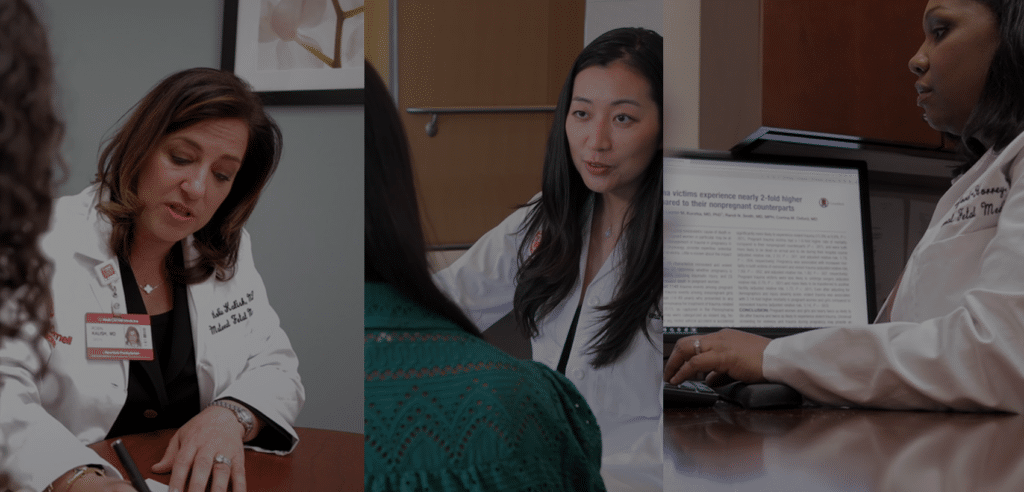
Weill Cornell, one of the world’s premiere teaching hospitals attracting talent worldwide, was ahead of the curve when it came to incorporating video introductions into their website and other content. Grey Sky worked on many of these doctor introductions for Weill Cornell’s Obstetrics and Gynecology department, capturing each clinician’s background and approach to care.
For each video, we interviewed physicians and administrators, often filming up to 7 doctors in one day on location at Weill Cornell. We optimized efficiency by running two crews concurrently – one focused on interviews, and one on capturing b-roll footage. It was inspiring to learn about these physicians, and to see the passion behind some of their reasons for going into medicine in the first place. We were honored to capture and share their professional and personal stories, helping to humanize them for the prospective patients.
Physician introduction videos help build trust and connection, helping patients make decisions that feel more well-grounded.
In Your Neighborhood
Weill Cornell is committed to providing care throughout New York City and Long Island. They’ve consistently continued reinvesting in neighborhoods in these areas by building additional practices that offer care across multiple specialties. In 2024, Grey Sky Films produced videos for Weill Cornell’s “In Your Neighborhood” campaigns, which highlighted increased access to care through locations other than the most well-known in upper Manhattan.
Each campaign included an overview of the practice, as well as physician interviews and b-roll with voiceovers. And of course, there was a big focus on the actual location and its surroundings. Showing off where each medical center was situated—and how patients could travel to and access it—was a major goal of these campaigns.
For these productions, we filmed walkthroughs of each facility, physician and staff interviews to talk about the practice as a whole, and b-roll footage featuring actor portrayals that showcased the services provided. We also filmed additional physician interviews to provide each doctor with a marketing video of their own. We delivered edits for Weill Cornell’s website and streaming platforms, as well as short 15-second “In the Neighborhood” videos. These shorter edits included shots of the local neighborhood and the practice itself, and were used for social paid campaigns to raise awareness for each location.
Just by virtue of being in New York City, these shoots came with some obvious challenges: Where do we find an uncovered parking lot for the equipment van? How do we get in and out of the building? Is there a loading dock? Can we roll our hampers and cases through the lobby? Are the doctors prepared to give us the time we need? Is this office open right now? How do we film without disturbing patients or interrupting staff workflow?
Often, our doctor interviews would be scheduled for 30-45 minutes, but we’d only have about 10. This is completely understandable when working with people whose job it is to save lives, and we have enough experience in this space to work around it. Filming each location’s exterior for this project was interesting, too. Because this was considered a small-scale production, permits weren’t required, but that meant we couldn’t set up tripods, lights, or any standing gear at all. So, with just a camera operator and a producer, we captured all exterior footage with handheld equipment and had to move quickly. Another fun aspect of these shoots was finding the right visual cues in each neighborhood, making the videos indicative of each specific one. We made sure to film surrounding landmarks like subway stations, parks, bridges, and identifiable buildings.
Addressing Stigma and Building Understanding though Healthcare Videos
If you’ve seen films like Rain Man, A Beautiful Mind, or Lorenzo’s Oil, you know the power of film to change hearts and minds about health conditions. Thoughtful storytelling like this can go a long way in educating the public about issues many people have never heard of, and building empathy where there may have been disregard. Here at Grey Sky, we’re passionate about learning & development—and education in general—so we love working on projects in this space. Throughout our 26 years, we’ve done numerous projects aimed at developing knowledge about a wide range of health conditions, in some cases educating patients on relevant treatments and products, and other times building general awareness about rare diseases.
Giving a Voice to the Tourette Syndrome Community
Tourette syndrome is a very misunderstood condition, and sadly, it’s often joked about. As with many other health conditions, the general public has seen myriad comedic representations of Tourette, which have continued to abound throughout social media and other areas. And, as with so many social issues, the most successful path in combating misinformation is providing basic education in a thoughtful, genuine way.
After learning of her son’s Tourette diagnosis and a decade of personal advocacy, Faith Rice founded the NJ Center for Tourette Syndrome. When social media was littered with videos of people faking tics, Faith’s successor at the Center worked with Grey Sky Films to develop a PSA campaign to address it. The campaign featured 4 brave teenaged ambassadors (Jenna, Dominic, Paige, and Mateo) who were willing to talk about their experiences and clear up misconceptions.
We conducted a virtual session to get acquainted with each ambassador and understand the specific issues they wanted to address. What came out during discovery guided our interview strategy, helping to ensure that each ambassador’s personal, authentic voice came through. We worked to create a safe, welcoming on-set environment, knowing these young people were bravely putting themselves in front of cameras to confront a difficult issue. Their fearlessness shone through in the face of this challenge, and the campaign struck a chord.
These videos were used across social media, the NJCTS website, and live presentations. They earned 400,000+ combined views across platforms, with Jenna’s PSA alone gaining 330,000 views, 23,000 likes, and nearly 1,000 comments on YouTube. We were honored to be a part of the effort to give this community a stronger voice, and to win the NJ Ad Club Award for it.
4 Brave
Ambassadors Confront
Misconceptions about
Tourette
Syndrome
Service Animals vs. Pets: Raising Awareness About The Seeing Eye
Some may know of the incredible, life-changing work of seeing eye dogs, but there’s still a need to increase awareness around it. Based in Morristown, NJ, The Seeing Eye has been around since 1929, breeding and training guide dogs to assist the blind. In 2018, this organization came to Grey Sky with a two-fold project: to demonstrate their presence in New Jersey and alert the public that guide dogs mustn’t be treated as pets. Guide dog training is intensely centered on keeping them focused. This ensures the safety of both the dogs and their human partners. But if people don’t understand this, they can interfere with a guide dog’s focus, which can be both dangerous and expensive.
We developed an approach that tells the story from the perspective of the guide dog, where she explains her role to viewers. She explains that people shouldn’t approach her when she’s working, and that she’s trained not to be distracted by other dogs. We filmed this in and around Morristown, which is a very busy area. So, it was amazing to witness this guide dog truly working, navigating the congested, noisy sidewalks without a single moment of distraction!
Patient Education for Nutricia Metabolics
One of the things we’re most proud of at Grey Sky Films is our status as trusted video production partners for an array of businesses across sectors. Among those is our longstanding client, @ Nutricia. This innovative company develops medical n foods products for people with food allergies, metabolic disorders, and epilepsy, supporting all stages of life.
Because Nutricia products are so highly-specialized and prescription-only, their video marketing and the audiences it serves are very niche. Many of these projects also have more in common with our work in learning & development, since they’re mostly focused on patient education. The company makes a concerted effort to build awareness with patients and clinicians about its unique products through social media, ad campaigns and events around the globe, engaging in a lot of grassroots approaches to reach the right audiences. By connecting with prospective patients, caregivers, and parents, they encourage them to speak with a dietician or doctor to learn more about prescriptions for Nutricia products.
We began working with Nutricia in 2016, and have since produced a host of educational, sales, and internal company videos covering a broad spectrum of topics. Our first Nutricia project addressed the needs of people with a condition called PKU (Phenylketonuria), a rare, inherited metabolic disorder requiring a low-protein diet. This was our first collaboration with Nutricia’s Brand Marketing Manager for Metabolics, @ Sandy Simons, who we still work with today.
Interestingly, we weren’t filming a product marketing video here. Instead, this was a two-prong project, involving a PKU patient’s story and a cooking show demonstrating how to make a quick, tasty, and most importantly, low-protein snack. Both segments featured Katie, who is not an actor, but a real woman living with PKU. It was her first time in front of the camera, yet she managed to find a way to feel comfortable sharing her story publicly.
Leading up to the shoot, Sandy provided the recipes, and Grey Sky helped put everything together by fleshing out & fine-tuning the script, furnishing all the cooking equipment, and bringing in the ingredients. Later, we did make actual product videos for Nutricia’s PhenylAde, their product specifically formulated for people with PKU. But we made just as many helpful “Low Pro” recipe videos—a reflection of Nutricia’s dedication to providing broad-spectrum support to their customers. We’re fortunate to work with a company like Nutricia, because they create products that help people, and their passion for what they do comes through in every exchange.